

“The Death Of A Bachelor”
Why estate planning is important for single and young individuals
To try to keep this article from being too much of a bummer, I have included twenty Panic! at the Disco song titles, including the title of this article. (Yes, I am aware of how Millennial-coded this makes the article. I am a Millennial who enjoys New York Times Word Games, so ¯\(ツ)/¯ )

As an estate planner, it is my job to plan for what can go wrong. One of those things is when someone who is “Far Too Young to Die” dies. When that person is single or doesn’t have a plan, it can make the transition more difficult for those who survive them.
While I have “High Hopes” for you living a long life and enjoying your Golden Days, let me offer a “New Perspective” as we discuss the “Good, the Bad, and the Dirty” of proactive estate planning for young adults.
Why it’s important
It is not a legal requirement that you have a Last Will and Testament or any other Estate Planning, “But It’s Better If You Do”. Without any planning, we run the risk of unnecessary Probate, unintended heirs, an unnecessary Guardianship or Conservatorship, and trouble with digital assets.
Unnecessary Probate
Probate is not a “Casual Affair”; it is the court-supervised process through which legal title to property passes after a person’s death. Probate is not “Always” required after a death. Some situations where probate may be required include, but are not limited to:
Sole Ownership of real estate
A bank account, retirement account, investment account, or other account (or accounts) with an aggregate total value of $50,000.01 or greater without a beneficiary designation.
Significant Creditors of the estate
Proactive Estate Planning can help make the Probate process easier and cheaper, or avoid the need for Probate altogether. Active estate planning includes Beneficiary Designations, a Last Will and Testament, Power of Attorney documents, a Revocable Trust, and any other proactive estate planning. These are some of the tools available in the State of Iowa. Every state has different rules on property transfers, so if you are an “LA Devotee” and are “Dying in LA”, you would want to consult an attorney licensed in California.
Unintended Heirs
Families come in all sorts of configurations, with varying degrees of amicability among the individuals involved. When a person dies without active estate planning, the “Silver Lining” is that the State has a backup plan, often called Intestacy. In Iowa, Intestate Succession for an unmarried individual is outlined in Iowa Code section 633.219. If you don’t have any children, then your estate is spilt equally to your legal parents. If you don’t have any surviving parents, then ½ of your estate is divided equally to the biological and legally adopted children of one parent, and the other half is divided equally to the biological and legally adopted children of your second parent. The distribution under 633.219 does not care if your “House Of Memories” goes to the parent you’ve gone no-contact with. It also doesn’t care that your half or step sibling, who has been your best friend your whole life and has had an “Impossible Year”, isn’t treated the same as a full-blooded sibling.
If you do active estate planning, you control the distributions. You get to decide who gets how much of what, if anyone is disinherited, any donations to charities, and so on.
Need for a Guardianship or Conservatorship
Once you are 18 years old, a legal adult, your parents or legal guardians no longer have the authority to make medical and financial decisions on your behalf. In many ways, as you enter your “Roaring 20’s”, this is a great freedom and a new level of privacy previously unexperienced. But what if you need help?
Without proactive planning, a person, not necessarily of your choosing, can apply to be your guardian or conservator. A person applying to be a guardian or conservator with the court will have to petition the court, pass a background check, show your need for a full or limited guardianship or conservatorship, and make annual reports for as long as the assistance is needed.
With proactive planning, you can execute Power of Attorney Documents for Healthcare and Financial Decisions to designate persons of your choosing to handle your affairs.
The use cases for these forms aren’t just a medical crisis or a disabling injury, although that is what we often do this planning for. Having an agent can also be useful when everything is going well. For example, if you are traveling or studying abroad, you can authorize a Financial Power of Attorney to help with banking and paying rent or other bills. A Healthcare Power of Attorney could help communicate with physicians to get prescriptions renewed, coordinate telehealth visits, or contact your insurance company to get an explanation of benefits or dispute a denial of coverage on your behalf.
Digital Assets
Social Media accounts, Email accounts, Investment accounts like Robinhood, and other digital assets vary in how much access survivors can have without express authorization. Meaning, if your survivors don’t have the passwords to your accounts, they may never gain access to that asset.
With active planning, a provision is included in the Last Will and Testament authorizing your executor to interact with that third party to gain access and control of that asset.
It is worth noting that some digital assets, like cryptocurrencies, are not regulated like bank accounts and other “Old Fashioned” accounts. And even with the power granted by a Last Will and Testament, those assets can be lost without a clear path of how to gain access to them.
Proactive Estate Planning
There are unique challenges when preparing an estate plan for a single individual or a young adult. Here are a few:
Distributions to Minors or a Class that still has potential to expand
Those of us who have the privilege of being a fun Aunt or Uncle often want to include our Nieces and Nephews in our estate plan. These amazing humans often have not yet reached the age of majority. In the state of Iowa, that means they cannot directly inherit. Even if they are a young adult, you may not want an 18-year-old to receive a large lump sum of money without supervision of a more adultier adult.
With proactive planning, funds can be directed to a Uniform Transfers to Minors Account (UTMA), a Testamentary Trust, a 529 College Savings Plan, or a Revocable Trust. This directed action can avoid court time and make your intentions for the funds clear.
We can also plan for the group to expand, so if you have more nieces and nephews after creating your documents, you don’t have to worry about them being left out or having to amend your documents.
Who is making the decisions?
Part of estate planning is designating people to fill specific roles in that estate plan: Executor, Trustee, Guardian, Power of Attorney for Healthcare, Power of Attorney for Finances, Power of Attorney for Disposition of Remains, and backups for each of these roles. Most of the time, our clients have plenty of people on their roster to choose from, but sometimes they don’t. Considering who can be there for you can be an unexpectedly difficult part of the process, but a vital one.
How To Start Your Estate Planning Journey
Do your research
Estate Planning can be complicated or simple. That varies depending on your goals and your situation. If you like to do independent research before diving in, we have many pertinent articles and many FAQs on our website.
Book a Consultation
If you know you want to do a Last Will and Testament, you can go straight ahead and book a Will in a Day® appointment.
If you want to discuss the role a Revocable Trust can play in your estate plan, I recommend starting with an Estate Planning Consultation.
If you know you want to have a Revocable Trust, please book a Trust Planning Consultation.
Make a Plan
Before your appointment, it is good to have an idea of who you would want your assets to transfer to. We will guide the process, but we won’t tell you what to do.
Continue to Have Conversations About Difficult Subjects
Before you make your estate plan, talk with your loved ones about their thoughts on the process.
After you have signed your documents, we encourage you to tell the people in your life, ““Hey Look Ma I Made It” - my estate plan.” It is up to you who you tell that you’ve done estate planning, but we recommend letting people involved in your estate plan know that you’ve completed it and that it is “Ready To Go”. If they have questions about their role in it, we can help answer those questions.
Celebrate the achievements
Talking about death, dying, and life after we’re gone isn’t fun, and it isn’t easy. We strive to make the process as painless as possible, but ultimately, we are here as a guide and as experts in estate planning. You are doing a hard thing, and you should celebrate; you are “Victorious”!
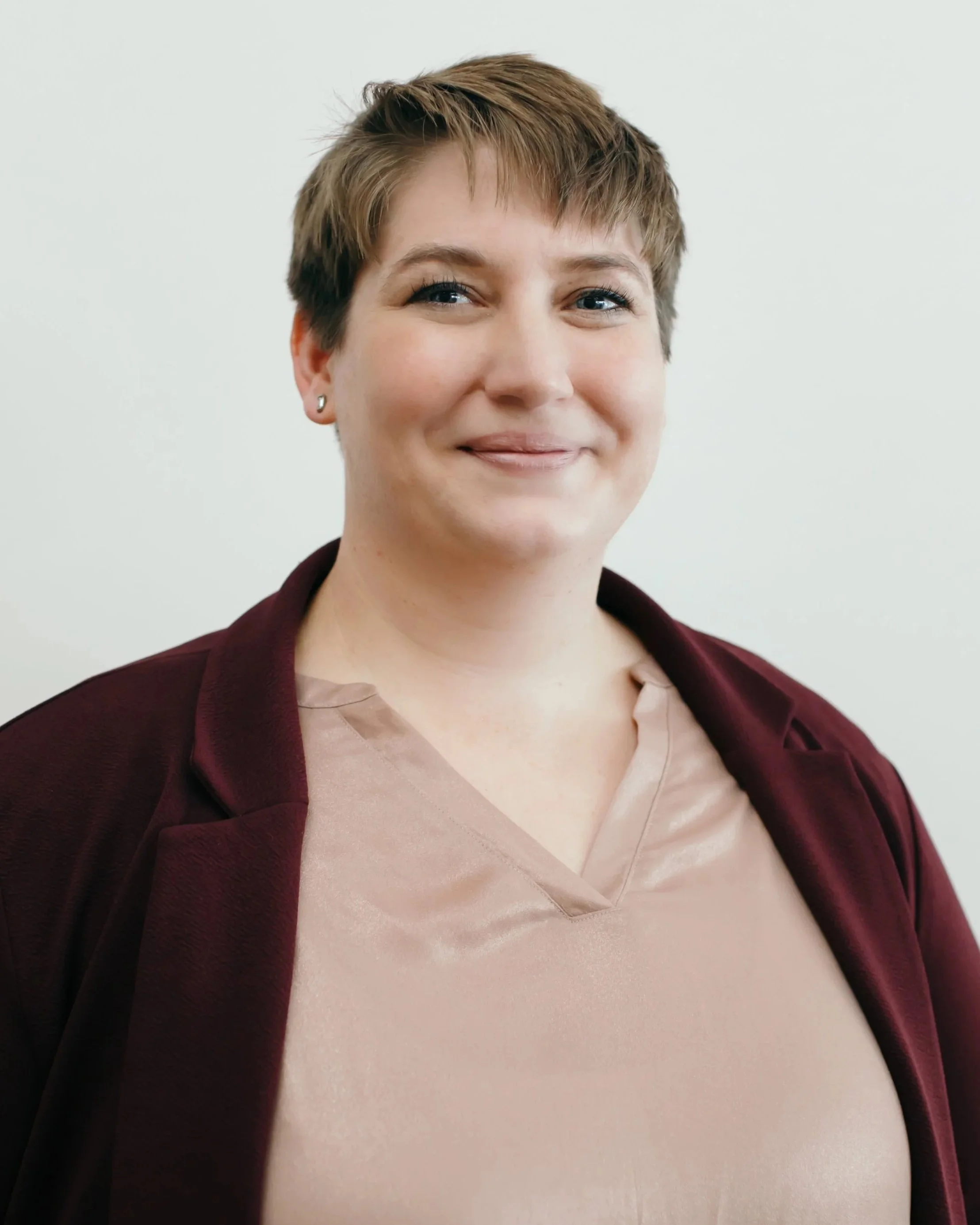
Michelle Christen is an Associate Attorney with Hope Wood JD.
She specializes in Estate Planning and Probate